Showing posts with label matter. Show all posts

Monday, October 24, 2011

Annotated Bib - Matter

Matter is a confusing issue until we understand what actually qualifies as matter. Children will have lots of qualities that they will apply to the definition of matter. These will usually meet some part of the qualities of matter, but usually not the whole concept of matter. Some of the qualities students think could not apply to a certain object can be proven by doing different experiments that prove to the student why that object is considered matter.

Books

Hottest, Coldest, Highest, Deepest By Steve Jenkins. (2004). Sandpiper. (978-0618494880) Gr.
By using nature, the author shows us how high is the highest mountain and other amazing facts to help students try to understand how extreme things can be in size, etc.K - 2.

Red Sings from Treetops: A Year in Colors By Joyce Sidman. Illustrated by Pamela Zagarenski. (2009). Houghton Mifflin Books for Children. (978-0547014944). Gr. Pre-K - 1.

This enchanting book takes children through the seasons of the year to teach them about colors. It season in explored in terms of how it encompasses color. Each page is a surprise to discover.

Shapes In Music (Spot the Shape) By Rebecca Rissman. (2009). Heinemann-Raintree. (978-1432921774). Gr. Pre-K - 1.

In this wonderfully engaging book, the author shows up where we can find many different shapes in everyday musical instruments. I can see a teacher bringing in most of the instruments to the classroom and really reinforcing the shapes to the students.


Spiky, Slimy, Smooth: What is Texture? By Jane Brocket. (2011). Millbrook Pr (T). (978-0761346142). Gr. Pre-K - 1.

Great pictures, whimsical verses, and clever descriptions of different textures. The author uses manufactured and natural items to showcase all the different textures we encounter.


What's the Matter in Mr. Whiskers' Room? By: Michael Elsohn Ross Illustrated by: Paul Meisel. (2007). Candlewick. (978-0763635664). Gr. K to 3.

Mr. Whiskers allows his students to explore science centers around the classroom and on the playground. They do experiments that help them to understand more about matter. The book also contains directions on how to create learning kits and the addresses for ordering supplies which would be a great thing for teachers.


Websites

Chemistry for Kids


This site has loads of information for teachers to use regarding what exactly is matter! There is a section for each state and also information about how matter can change. There is even a place to take quizzes, which could help a teacher in creating their own quiz.

Howard Hughes Medical Institute


A cool site that has a sections for educators and students all about science.

Kindergarten Games - Shape

While a little plain, this site contains different games for Kindergarteners. This will link you to a game asking the students to identify shapes. The words are written on the screen, but they are also spoken by the computer. There is also a game for identifying colors.

Science Online


This site has many different resources available for learning about matter. There are links to lesson plans, experiments, songs, and interactive websites for students. The information is sorted by grade level which makes is easier to find the right information you are looking for.

Zoodles


This site is designed for parents to provide games for their children to play online. Their is a free subscription required. The site can be designed to block out ads and also for limiting the time allowed. The games seem to center around different children's show and their are games about color and also size.

For Teachers
Virginia Standards of Learning K.4

The student will investigate and understand that the position, motion, and physical properties of an object can be described. Key concepts include
a) colors of objects;
b) shapes and forms of objects;
d) relative sizes and weights of objects; and

The concepts developed in this standard include the following:
  • An object may have many properties that can be observed and described.
  • An object can be described readily in terms of color.
  • An object can be described in terms of shape, size, and texture.

Sunday, October 23, 2011

Annotated Bib - Solids, Liquids, and Gases

Solids, liquids, and gases are the three stages of matter. Ever wonder why solids melt, liquids freeze, or balloons float? Being able to describe the differences in the states of matter is important for children to understand. Utilizing literature books in Science enhances learning of all ages and levels. Children enjoy the stories and colorful illustrations while learning the essential
knowledge skills, and processes required.

Books

Change It!! by Adrienne Mason. (2006). 32p.Kids Can Press (978-1553378389). Gr. K-3.

Change It! presents colorful illustrations and a variety of matter hands-on activities that encourage active learning. This book incites curiosity, observation, and experimentation. At the end of the book are additional resources for parents and teachers.

It's Science: Solid, Liquid, or Gas? by Sally Hewitt. (1997). 32p. Children's Press (978-0516263939). Gr. K-3.

Presents the states of matter; solids, liquids, and gases incorporating real pictures. It encourages thinking, observing, and experimenting in the "think about it" and "try it out"boxes throughout the book. A glossary of essential vocabulary words help children understand the terminology used to explain matter.


Starting With Science: Solids, Liquids, and Gases.by Ontario Science Center. Ray Boudreau illus. (1995). 32p. Kids Can Press (978-1550744019). Gr. K-3.

Appealing to children! A book of easy to follow experiments that children can explore and experiment. There are additional information and resources at the end of the book. As a precaution, the experiments include safety guidelines to follow if needed. A great book for teachers to incorporate into class or group experiments.

What is the World Made Of? by Kathleen Weidner and Paul Meisel illus. Zoehfeld. (1998).32p. Harper Collins Publishers (978-0064451635). Gr. K-3.

The world is made of: Matter! This book presents the three states of matter in a whimsical and interactive picture book."Everything on Earth is matter." The book guides readers to test different states of matter. From spraying a perfume bottle to boiling a pot of water to holding an ice cube. Children learn through hands-on activities.

What's the Matter in Mr. Whisker's Room? by Michael Elsohn Ross and Paul Meisel illus. (2007). 48p. Candlewick Publishing (978-0763635664). Gr. K-3.

A wonderful book to encourage all learning styles. Readers encounter seven "stations" which encourage learning through observation and exploration. The illustrations depicting the hands-on activities are easy to follow along. A great book for teachers to re-create in their classrooms. The recipes and additional resources can be found at the end of the book.

Web Resources

ABPI Resources for Schools
A great animated tutorial and learning activity for kids to learn the different properties of matter. There are twelve lessons and the last button provides a glossary of essential vocabulary terms.

BBC
Fantastic interactive activity for kids to learn about solids, liquids, and gases. Fill the beaker with a chunk of chocolate and watch the changing properties of a solid changing into a liquid and back to a solid. There are several "tests" that children can manipulate to learn about the different states of matter.

Full Option Science System
What happens when you put a bone in an oven or a boot in the freezer? This fun interactive activity tests different materials to distinguish the various properties of matter.

Super Teacher Worksheets This website provides teachers with matter related worksheets and activities. Included are matter themed songs set to the tunes of the "Wheels on the Bus" and "Bingo." From cut and glue sorting activities to demonstrations to questions to encourage critical thinking, the activities and worksheets provided will enhance any "matter" lesson.

Teaching Ideas
A great resource for teachers to incorporate in their lessons about the different properties of matter. This site provides activity worksheets, experiments, SmartBoard interactive quizzes, and interactive games to enhance children's learning.

For Teachers

Va Standard of Learning 2.3

All substances are made of matter.
  • Matter is anything that has mass and takes up space.
  • Solids have a defined shape and volume.
  • Liquids have a definite volume and take the shape of the container.
  • Gases will completely fill any closed container (take the shape of its container) and assume the volume of its container. (e.g., Helium gas put into a balloon takes the shape of the balloon because the balloon defines its shape.
  • Mass is a measure of the amount of matter.
  • Weight is the measure of the gravitational pull on an object.
  • Volume is the measure of the amount of space occupied by matter.
  • Matter most commonly occurs in three phases: solids, liquids, and gases.
  • Matter can change from one phase to another.
  • When matter changes from one phase to another, these changes are referred to as physical changes.
  • Changes from solid to liquid to gas require the addition of energy


Annotated Bib - Basic Properties of Solids, Liquids, and Gases

Matter is all around us! You, the world, and everything in the entire universe are made of matter. Matter exists in three forms, or states--solid, liquid, and gas. The following books and web sites are excellent resources to teach the basic properties of matter to second graders.

Books
Change It! Solids, Liquids, Gases and You. By Adrienne Mason. Illus. by Claudia Davila. 2006. 32p. Kids Can Press, (9781553378389). Gr. 2 - 5.

Change It! takes the physics of matter and transforms it into an easy-to-understand science book for younger students. This book is filled with surprising facts and hands-on activities to explore the states of matter.


Matter: See It, Touch It, Taste It, Smell I
t. By Darlene Stille. Illus. by Sheree Boyd. 2006. 24p. Picture Window Books, (9781404803442). Gr. 2 - 5.

This book explains the three states of matter and how they can change. In particular, the book presents everyday activities that involve matter such as camping, riding a scooter, and swimming. Additionally, this book features "Fun Facts" strategically placed on certain pages, as well as a simple experiment to explore solids.


Solid, Liquid, or Gas?. By Sally Hewitt. Illus. by Ray Moller. 1998. 32p. Children's Press, (9780516263939). Gr. 2 - 4.

Children are natural scientists and learn by touching and feeling, noticing, asking questions, and exploring. This It's Science! series book uses familiar objects as a starting point for the discussion of matter. Each double page spread introduces a new topic, gives information, asks questions, and provides activities that encourage children to make discoveries and develop new ideas on their own.

What Is Matter?
. By Don L. Curry. Illus. by Caroline Anderson. 2005. 31p. Children's Press, (9780516246673). Gr. 1 - 3.

This baseball-themed book introduces young readers to matter. Colorful photos and simplistic text encourages children to read independently as they learn that matter is everywhere and comes in different forms. This book is the perfect classroom library addition, especially for students who love baseball.


What Is the World Made Of? All About Solids, Liquids, and Gases.
By Kathleen Weidner Zoehfeld. Illus. by Paul Meisel. 1998. 32p. HarperCollins, (9780064451635). Gr. 1 - 3.

From the Let's-Read-And-Find-Out-Science series, this book's lively watercolor illustrations and simple, informal text provide readers with a clear explanation of the three states of matter. Additionally, the book uses water to show how matter can change from one state to another. The book features a "Find Out More" page that provides additional activities to explore solids, liquids, and gases.


Web Sites
The following web sites are a great way for students to build their understanding of the states of matter:

Changing States of Matter Sequence Game
This game requires students to place several cards in order to show how to change a liquid into a solid.


Moby's Match: Solids, Liquids, and Gases
This concentration game requires students to match solids, liquids, and gases. This game provides students with everyday examples such as the sun, lemonade, books, and balloons to explore the different forms of matter.

CATIE Testing Time: Solid, Liquid, & Gas
Students must examine household items (i.e. toothpaste, hairspray, mouthwash, soap, shampoo, etc.) to determine whether they are a solid, liquid, or gas.

e-Learning for Kids: States of Matter
In this interactive game, Mr. Beaker helps students describe matter and its three states, as well as examine how matter can change. SPECIAL NOTE: Students must press the e-Learning for Kids logo to begin the game.


Solids, Liquids, and Gases Sorting Game
This game requires students to sort everyday items, according to the states of matter. Additionally, this game features artwork by second grade students from Henrico County Public Schools. SPECIAL NOTE: Students may think gasses is spelled incorrectly. Use this as a "teachable moment" to explain that there are two plural forms of the word, gas.


For the Teacher

Virginia Standards of Learning

Standard 2.3 The student will investigate and understand basic properties of solids, liquids, and gases. Key concepts include
(a) identification of distinguishing characteristics of solids, liquids, and gases;
(b) measurement of the mass and volume of solids and liquids; and
(c) changes in phases of matter with the addition or removal of energy.

Background Information

  • All substances are made of matter.
  • Matter is anything that has mass and takes up space.
  • Solids have a defined shape and volume.
  • Liquids have a definite volume and take the shape of the container.
  • Gases will completely fill any closed container (take the shape of its container) and assume the volume of its container.
  • Mass is a measure of the amount of matter.
  • Weight is the measure of the gravitational pull on an object.
  • Volume is the measure of the amount of space occupied by matter.
  • Matter most commonly occurs in three phases: solids, liquids, and gases.
  • Matter can change from one phase to another.
  • When matter changes from one phase to another, these changes are referred to as physical changes.
  • Changes from solid to liquid to gas require the addition of energy.

Second Grade Science Curriculum Framework

Saturday, September 3, 2011

Annotated Bib - Matter

Learning about the states of matter gives children a new way to label objects in the world around them and it also provides one of their first introductions to chemistry. Because reading about solids, liquids, and gases for the first time may be confusing for some children, books should be chosen that are easy to read and provide examples. Opportunities to try experiments which accompany these new ideas should be included in a lesson about states of matter.

This post suggests books which satisfy the SOL for grade 2. A few of the books are easy reads which provide a friendly introduction to the idea of different types of matter by including lots of pictures, humor, and descriptions of everyday objects. Some encourage the type of thinking that is required for a student to determine a particular object's matter-type. A few of the books include experiment ideas which work particularly well in the classroom.

Change It!: Solids, Liquids, Gases, and You.
By Adrienne Mason. Illustrated by Claudia Davila. 2006. 32p. Kids Can Press, (1553378385). Gr K-2.

This book provides a very basic introduction to solids, liquids, and gases and should probably be used for students who are struggling in reading. The book provides ideas for experiments.


By Salvatore Tocci. 2002. 48p. Childrens Pr, (0516273523). Gr. 1-3.

This book is full of ideas for experiments dealing with the properties of matter. The book contains a glossary and index as well as pages of ideas for further reading and exploration for the independent child.

By Darlene Stille. 2004. 24p. Picture Window Books, (1404803440). Gr. K-2.

This book describes how matter exists in the simple objects around us. It provides simple descriptions of how solids, liquids, and gases change form.


By Richard Spilsbury. 2008. 32p. Enslow Elementary, (0766030946). Gr 1-3.

This book provides a basic description of solids, liquids, and gases and examples of each. It is full of pictures and safety tips. It provides ideas for science experiments.


What is the World Made of? All About Solids, Liquids, and Gases. By Paul Meisel and Kathleen Weidner Zoehfeld. 1990. 32p. Collins, (0064451631). Gr. K-2.

This is another basic approach to learning about the states of matter and it includes a lot of humor. The book uses everyday objects as examples of types of matter.


Websites
This website is useful for teachers who would like to use worksheets, activities, or songs to teach their 2nd graders about the states of matter.

Diagrams About States of Matter for Kids
This website is useful for kids to look at diagrams which explain about the states of matter. Teachers may also use these in class.

This website provides an animated movie that is kid-friendly about the states of matter.

Children are provided a recipe for "ooze," which teaches them how to tell the difference between liquid and solid states of matter.

This website provides teachers and students with detailed information about the states, structures, and properties of matter.

For Teachers
VA Standards of Learning
2.3: The student will investigate and understand basic properties of solids, liquids, and gases. Key concepts include:
a) identification of distinguishing characteristics of solids, liquids, and gases;
c) changes in phases of matter with the addition or removal of energy.

Wednesday, August 31, 2011

Annotated Bib - Matter

There are three states of matter: solids, liquids, and gases. These states can be easily understood by young children most easily in relation to the weather. Children are often intrigued by the different forms of precipitation and condensation but do not understand the concept. By studying matter through weather and other simple activities, young children will get an idea of the different properties.

Some of the books and activities listed below will help your students better understand this cycle and the idea of solids, liquids, and gases. There are resources for both students and teachers.

Matter is studied throughout Elementary school and beyond. The focus of this blog is for young children and more specifically fits into the 2nd grade Virginia Standards of Learning.

Books
A Drop of Water. By Walter Wicks. Illus. by the author. 1997. 40p. Scholastic Press, (9780590221979). Gr. 1-5.
Walter Wick introduces water as mysterious. He proposes interesting characteristics of water using beautiful photography. He explains water using scientific language that children may begin to understand. This is a more advanced book but teachers can choose excerpts to use during class.

It’s Science! Solid, Liquid, or Gas? By Sally Hewitt. Illus. by the author. 1998. 32p. Children’s Press, (9780516263939). Gr. K-3.
This book introduces solids, liquids, and gases using definitions and simple, everyday objects to help children understand matter. There are questions, explanations, and activities for children throughout the book.

Liquids in My World. By Joanne Randolph. Illus. by the author. 2007. 24p. The Rosen Publishing Group, (9781404284270). Gr. K-3.
Helps children understand what a liquid is, where we see liquids, and helpful vocabulary to go along with understanding liquids.

Splish Splash. By Joan Bransfield Graham. Illus. by Steve Scott. 2001. 40p. Sandpiper, (9780618111237). Gr. K-2.
This is a cute and creative book about the different states of matter using poetry. The words are strewn in with the pictures to emphasize the poems using words.

The Water’s Journey. By Eleonore Schmid. Illus. by the author. 1994. 32p. North-South/Night Sky Books, (9781558583603). Gr. 1-3.
This book paints a picture of water’s journey in the world. It begins with the water falling from the sky, running along rivers and waterfalls to the ocean, and comes full circle with the evaporation and precipitation again.

Web Sites
Fossweb Solids and Liquids
On this page you can find an interactive game for students, common questions and answers related to matter, as well as links to images, movies, audio, and other websites.

PBS Teachers Exploring Weather
Ideas for the classroom and links for students and teachers can be found on this webpage.

This site includes activities for students involving melting ice and boiling water. It also contains an interactive game to help understand the changing states of matter, how to keep an ice cube from melting, and other helpful links for teachers and students.

Second Grade Science Activities
This web page is a great resource for classroom Science activities. There are two activities included which relate to this lesson, one called Puddle Science which studies evaporation, and another called States of Matter in a Baggie which shows students an example of freezing, melting, condensation, and evaporation.

Study Jams! Solids, Liquids, and Gases
This website is helpful for students. It explains what matter is and includes a video, song, quiz, and vocabulary. It also includes a lesson plan and teacher guide to help with teaching matter.


For Teachers
Science Standards of Learning for Virginia Public Schools
2.3 The Student will investigate and understand basic properties of solids, liquids, and gases. Key concepts include
a) identification of distinguishing characteristics of solids, liquids, and gases;
c) changes in phases of matter with the addition or removal of energy.

Background Information from Curriculum Framework
- Matter most commonly occurs in three phases: solids, liquids, and gases.
- Matter can change from one phase to another.
- When matter changes from one phase to another, these changes are referred to as physical changes.
- Changes from solid to liquid to gas require the addition of energy.

Monday, August 29, 2011

Annotated Bib - Phases of Matter

Everything around you is made up of matter. Matter is defined as anything that has mass and takes up space. The three different states of matter are solids, liquids, and gases, and each state has its' own characteristics. Our senses are always helpful when distinguishing one state of matter from another. Though solids, liquids, and gases all have their own unique characteristics, some matter can change from one state to another. This post provides resources that, in addition to characterizing each state of matter, show the effect temperature has on the different states of matter.

While this post focuses on the states of matter at the 5th grade level, this topic also appears in the Virginia Standards of Learning for 2nd grade.


Books
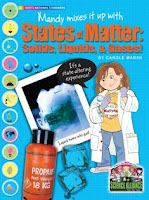
Mandy Mixes It Up With States of Matter: Solids, Liquids, and Gases. By Carol Marsh. 2008. 32p. Gallopade Intl., (9780635066688). Gr. 4-6. 
This activity book is written from the perspective of a group of kids who call themselves the "Science Alliance. This advanced book presents definitions and explanations for the three states of matter, as well as various activities students can complete.

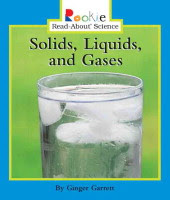
Solids, Liquids, and Gases . By Ginger Garrett, Linda Bullock. 2005. 32p. Scholastic Library Publishing, (9780516246635). Gr 2-6. 
This simple and direct text uses water, a candle, and the human body to illustrate the three different phases of matter.

States of Matter: A Question and Answer Book.
By Fiona Bayrock. Illus. by Anne McMullen, Ted Williams. 2007. 32p. Capstone Press, (9781429602273). Gr. 3-6. 
This picture book introduces the composition of matter, the different states, and the effects of changing states.

What Is the World Made Of? All About Solids, Liquids, and Gases. By Kathleen Weidner Zoehfeld. Illus. by Paul Meisel. 1998. 32p. Harper Collins Publishers, (9780064451635). Gr. 2-5. 
"Walls and blocks, dolls and socks. Milk and lemonade. Rocks and tress. All of these things are made of matter" (6). Water is matter that can easily change its state depending on the temperature; but most matter stays as one state.

What's the Matter in Mr. Whiskers' Room? . By Michael Elsohn Ross. Illus. by Paul Meisel. 2007. 48p. Candlewick Press, (9780763635664). Gr. 2-5.  
When Mr. Whiskers prepares to teach his science class about matter, he sets up various learning stations in the classroom and on the playground. Mr. Whiskers' students get to travel around to each station and experiment with the different forms of matter. Directions for setting up each learning station are included in the book.

Web Sites
This site gives characteristics of each state of matter, as well as a description and explanation of particle movement in solids, liquids, and gases.

Information for Properties of, and Changes in, Matter
At this site, teachers can gain background information on matter, get ideas from provided lesson plans and student activities. This site includes additional resources and websites for teachers who seek to better their understanding of, and ability to teach, matter.

This game will allow students to categorize words and phrases in relation to each state of matter. Students will learn how to associate different vocabulary with the different states.

This web site includes an interactive video about solids, liquids, and gases, as well as the effects of temperature on the states. Also on this site is a song about the states of matter and the changes that can occur from one state to another. In addition, provided is a short vocabulary list of words to consider when thinking about the states of matter. Lastly, the site contains a short quiz that covers the states of matter.

Teaching Matter
This site contains several lesson plan ideas from various teachers who have taught matter at various grade levels.

For Teachers
Virginia Science Standards of Learning
5.4 The student will investigate and understand that matter is anything that has mass and takes pus space; and occurs as a solid, liquid, or gas. Key concepts include
a) distinguishing properties of each phase of matter;
b) the effect of temperature on the phases of matter

Background Information from Curriculum Framework
Grade 2
  • Matter is anything that has mass and takes up space.
  • Matter comes in three different forms: solids, liquids, and gases. Solids hold their shape, liquids and gases have no shape.
  • Some matter can change its state with the presence of more energy and vice versa.
Grade 5
  • Particles in a solid are bonded tightly together, and usually have a specific pattern. These particles do vibrate, but do not move from place to place.
  • Particles in a liquid are close together, but have no particular arrangement. Liquid particles vibrate and slide past one another.
  • Particles in a gas are well separated with no regular arrangement. These particles move freely and rapidly throughout.
  • A rise in temperature can cause a solid to melt and turn into a liquid, and cause a liquid to turn into a gas.
  • A decrease in temperature can cause a liquid to turn into a solid.