Showing posts with label weather. Show all posts

Wednesday, February 4, 2015

Thematic Book List - Weather (An Introduction)

Weather describes the condition of the atmosphere at a particular place at a given point in time. Generally weather is described in terms temperature, pressure, wind conditions, moisture, etc. Because the weather is created by a mixture of factors, weather patterns change regularly. In contrast to this, climate refers to the "average" weather conditions for an area over a long period of time.

Here's an annotated list of books that provide an introduction to weather and weather forecasting.

Nonfiction Picture Books 
Can It Rain Cats and Dogs? (1999), written by Melvin and Gilda Berger and illustrated by Robert Sullivan - In an engaging question and answer format, this book provides a nice introduction to a range of weather topics. The book is divided into three subject categories:  (1) sun, air, and wind; (2) rain, snow, and hail; and (3) wild weather.

Feel the Wind (1990), written and illustrated by Arthur Dorres - This book in the Let's-Read-and-Find-Out Science series provides fun book simplifies facts about wind so that they are easy to understand. Children will learn about what causes wind, its place in weather, and how we can use it. There are also instructions on how to make your own anemometer.

Gusts and Gales: A Book About Wind (2003), written by Josepha Sherman  and illustrated by Omarr Wesley - This book in the Amazing Science series describes many different types of winds, including global winds, trade winds, local winds, and breezes. The text also touches upon extreme wind weather, including hurricanes and tornadoes.

I Face the Wind (2003), written by Vicki Cobb and illustrated by Julia Gorton - This is a wonderful introduction to what wind is and how it works. It even debunks the popular idea that air weighs nothing. Readers simply need a few materials (a plastic bag, a hanger, balloons, etc.) in order to conduct the series of basic experiments within the book. Between experiments, readers are offered explanations of how wind does what it does and how we experience it. The simplicity of the language combined with the great illustrations and easy-to-do science experiments make this book a wonderful resource for teachers and parents alike.

The Kids' Book of Weather Forecasting (2008), written by Mark Breen and Kathleen Friestad and illustrated by Michael Kline - This book opens with directions on keeping a weather log and does a great job of encouraging kids to make observations and predictions about the weather. Readers will find a wealth of information about weather, as well as directions on how to create simple versions of the most common instruments found in a weather station, including a rain gauge, hygrometer, psychrometer, barometer, and anemometer.  

National Geographic Readers: Weather (2013), written by Kristin Baird Rattini - This level 1 reader describes weather in the simplest of terms. Written in short chapters with economical text, this is a perfect introduction to weather for the youngest students. Back matter includes a picture glossary.

Oh Say Can You Say What's the Weather Today? All About Weather (2004), written by Tish Rabe and illustrated by Aristides Ruiz - This book from The Cat in the Hat’s Learning Library is written in the style of Dr. Seuss. In it, Cat in the Hat and his friends travel by hot-air balloon and experience different types of weather and learn why we need to know what the weather is going to be. Back matter includes a glossary and list of additional resources. 

Pink Snow and Other Weird Weather (1998), written by Jennifer Arena and illustrated by Heidi Petach - This book in the Penguin Young Readers series looks at strange and unusual weather occurrences, such as pink snow, hail frogs, raining jellyfish, and more.

Ready to Read: Wind (2003), written by Marion Dane Bauer and illustrated by John Wallace - This Level 1 text uses simple words and short sentence structures to introduce readers to wind and its role in creating weather.

W is for Wind: A Weather Alphabet (2006), written by Pat Michaels  and illustrated by Melanie Rose - In two levels of text, one poetic and one informational, readers are lead through an alphabet of weather terms (a is for atmosphere, be is for barometer, c is for cloud, d is for dew, etc.). Written by a professional weatherman and storm tracker, Michaels explains weather phenomena, instruments, and more in clear, easy to understand language. Don't miss the helpful teaching guide that accompanies the text.

Weather (2006), written by Seymour Simon - In stunning pictures and clear and engaging text, Simon provides a comprehensive look at the weather. Beginning with the sun as the driver of our weather system, the text moves on to examine wind patterns, temperature, clouds, precipitation, smog, and the greenhouse effect.

Weather Forecasting (1993), written and illustrated by Gail Gibbons - In this book, Gibbons takes children through the four seasons and the weather that is associated with each one. She uses meteorologists at a weather station to explain how seasonal weather is predicted, observed and recorded. Some of the terms may be complicated for children, but Gibbons breaks them down so that they are easier to understand.

Weather: Whipping Up a Storm! (2012), written by Dan Green and designed and created by Basher - This book in the Basher Basics series presents a series of personified characters that describe their roles in creating weather. Chapters include World of Weather, Blue Sky Dreamers, Wet 'n' Wild, and Extreme Weather. Back matter includes a glossary. Learn more by thumbing through this sample.

Weather Words and What They Mean (1992), written and illustrated by Gail Gibbons. - In text and pictures, Gibbons reviews an extensive list of vocabulary words related to weather including different types of precipitation, weather instruments, temperature and much more. The final page presents a number of interesting facts about weather.

What Will the Weather Be? (2002), written by Lynda Dewitt and illustrated by Carolyn Croll - This book in the Let's-Read-and-Find-Out Science series explains the basic characteristics of weather and how meteorologists use a variety of tools to gather data for their forecasts. Readers will learn what scientists know about the weather and how they use this information to try and predict it.

Poetry
Make Things Fly: Poems About the Wind (1998, OP), edited by Dorothy M. Kennedy, illustrated by Sasha Meret - This collection of 27 poems devoted to the wind covers topics like the sound of wind, tornadoes, seasonal wind, windy nights, and much more. Includes poems by Russell Hoban, Eve Merriam, Myra Cohn Livingston, Karla Kuskin, and others.

Seed Sower, Hat Thrower: Poems about Weather (2008), written by Laura Purdie Salas - This collection of weather-themed poems was inspired by an amazing collection of photographs. The re are numerous poetic forms and the topics are wide ranging and cover all kinds of weather phenomena. 

Weather: Poems for All Seasons (1995), collected by Lee Bennett Hopkins and illustrated by Melanie Hall - This collection of poems in the I Can Read series covers topics like the sun, wind, clouds, rain, fog, and more.

Weather Report (1993, OP), collected by Jane Yolen and illustrated by Annie Gusman - This collection of more than 50 poems is divided into sections covering rain, sun, wind, snow, and fog. Each section begins with a brief folk rhyme, followed by a range of poem types written by a nice mix of classic and contemporary poets. 

Online Resources
For additional resources, consider these sites.
I also have a Pinterest board on this topic with many ideas and activities for instruction.
Follow Tricia's board Weather/Earth's Atmosphere on Pinterest.
You'll notice that books on storms like hurricanes, tornadoes, and blizzards are missing from this post. That is the subject for the my next thematic list, so stay tuned!

Monday, February 11, 2013

Naming Winter Storms

Photo by Jason Meredith.

I was a bit surprised last week when the winter storm that was heading for the northeast was dubbed "Nemo." Since when do we name winter storms? As someone who grew up in western New York and lived through plenty of lake effect snow storms and big blizzards, I don't remember a storm getting named unless it was a huge event, and even then they weren't name until AFTER they passed through. And let's face it, the names weren't very creative—the Blizzard of 1977 being a prime example.

Apparently the Weather Channel has decided that we should name winter storms. Here's an excerpt from their web site addressing this issue.
Hurricanes and tropical storms have been given names since the 1940s. In the late 1800s, tropical systems near Australia were named as well. Weather systems, including winter storms, have been named in Europe since the 1950s. Important dividends have resulted from attaching names to these storms:
  • Naming a storm raises awareness.
  • Attaching a name makes it much easier to follow a weather system’s progress.
  • A storm with a name takes on a personality all its own, which adds to awareness.
  • In today’s social media world, a name makes it much easier to reference in communication.
  • A named storm is easier to remember and refer to in the future.
The article raises some really interesting issues. Of course, the teacher in me wants to know how this fits into the curriculum. I do think this topic provides a nice teachable moment.

You can read more about this issue at Why The Weather Channel is Naming Winter Storms.

Friday, December 2, 2011

Unit Resource Portfolio: Weather Conditions and Phenomena

In Virginia, students in 4th grade are reintroduced to weather and all of its components. They build on their second grade background knowledge and begin to learn about what a meteorologist does, what air pressure is, and how fronts are formed. In this post you will find activities, foldables and assessments for teaching a ten-day unit on weather, as well as great books and websites to check out.

Vocabulary for Unit

Weather Vocab Print-out


Instructional Plan


Day 1: Intro - What is Weather?
Students Will:
  •  Recall the definition for weather, as well examples of it
On the first day of this unit, the students will come together to get a good general idea of what weather is and how it is forecast. We will ask questions and write up answers on the board before getting a good class consensus of questions such as: " What  is Weather?" "Where does it come from?", etc. Once this has been accomplished, I will split students into 6 teams of about 4 students or so to make weather maps that will be shared over the course of the unit. The teams will be in charge of a different type of weather map, and the list is as follows: 1) Temperature 2) Precipitation 3) Wind Speed 4)Satellite 5) Radar and 6) Fronts. In their groups, they will be asked to brainstorm the answers to a few targeted questions, found here. They will have about 15 minutes to start thinking about their maps.


Introduction of Projects:
Before moving on to the next subject of the day, I will introduce their final projects that will be handed in at the end of the unit (day 10) and will be presented. Here, they will be asked to work alone. Each student will be asked to pick a weather phenomenon to do a project on. They will be expected to turn in either a pamphlet/brochure or fact sheet about their chosen phenomena and will include the key factors as well as the meteorological tools needed to assess it. We will be learning more in depth about the tools and factors so this project will be an excellent way to assess their gained knowledge.
A website for this Project can be found here.


Day 2: Weather Maps
Students Will:
  • Discover and research weather maps
  • Work in a collaborative effort
The time for this session will partially  be spent in the computer lab gathering data and then the rest of the time we will be in our classroom making our maps. Students are encouraged to use color and will be assessed on their ability to work as a group as well as the final outcome. Throughout the unit, we will have each group's poster displayed in the classroom. On the day we explore the topic more in depth, the group who completed the matching map ill be asked to then briefly present the map and their findings to the class. These will be springboards for each day.

Note to add: As groups share their in-class projects, I will be using this form to assess their work and ability to work as a team. This will be one of the assessments for the unit.


Day 3: Temperature
Students will:
  • Correctly use a thermometer to tell temperature 
  • Graph temperatures in a cohesive way
On our first exploration day, we will have the Temperature map group present their map and answers to the questions found here before we get into our lesson.
In the class period, we will do Lesson One from this webpage, in which the students will work in pairs using a thermometer to take the temperature of different places outside. As a class, we will share our findings and graph the results.

Homework: Students will be given this worksheet that will be graded as an assessment. 


Day 4: Precipitation
Students will:
  •  Distinguish different types of precipitation
  •  Read and decipher a precipitation map
To begin our lesson for the day, the Precipitation group will share their map and answers to their questions to the class. 


Once the group has presented their map, the students will presented with the worksheet from this website (page 2) as a warm up to the lesson. Here, they will be able to use their new knowledge of precipitation maps  Before they complete it, we will go over key concepts of precipitation; such as rain, sleet, snow, thunderstorms, hail, etc. As well as check that students understand the symbols on the map. When students have completed their papers, we will go over the answers and clear up any confusions. In my lesson, this worksheet is not to be assessed, just used as a start-off point.

From here, students will do the first extension from the first part of the website mentioned earlier. In this extension, students will be asked to make a precipitation poem. Since this part of the lesson over laps with language arts, you are able to use up a little more science time than what is normally allocated. Students are to write a poem about how a certain type of precipitation feels, its effects, etc. Have the students illustrate their poems and share them with the class.


Homework: Students will make the following interactive foldable, after cutting out pictures and definitions from this handout.  This will be a great way for students to remember what the characteristics of each type of precipitation are.


Day 5: Wind Speed
Students Will:
  •  Develop a working model of an anemometer 
On Day 5 we begin as we have the last two sessions, with the Wind Speed group presenting both their map as well as their questions/answers with the entire class. 


Once the group has presented their map, I will have the students pair up to build their own anemometer using this activity. While they are putting together their anemometers, I will pass out this worksheet and instruct them on how to do the experiment.If the weather is cooperative, we may head outside to complete the measurement part of the experiment. If not, we will have to use small fans inside to measure wind speed. The worksheet above may be used as an assessment tool or to see if the student is in need of any guidance with this subject.


Day 6: Fronts and Air Masses
Students Will:
  • Identify a cold and warm front by a visual
  • Summarize what happens when warm and cold air mix
  • Replicate cold and warm fronts
This class session will start with the Fronts group briefly sharing their map and questions with the class. 


In this session, students will get the opportunity to learn about barometers, air pressure, and weather fronts (hot and cold). 


To teach the students about these topics, I chose to use a great lesson plan that I found here. (Note: only the section labeled the Highs and Lows of Weather) To complete the lesson plan, be sure that you have enough weather maps from newspapers or online for each student, or pairs, if you must. It would be a good idea to mix up the weather maps. After each student/group has had a chance to look over their map, give the students some time to tell you and the class what their thoughts are about the map. What do the symbols mean? How do meteorologists know what the weather will be? Why are maps like these in the newspaper each day? Continue with the lesson plan, explaining what all of the symbols are and clarifying any students questions. Introduce the following foldable activity:


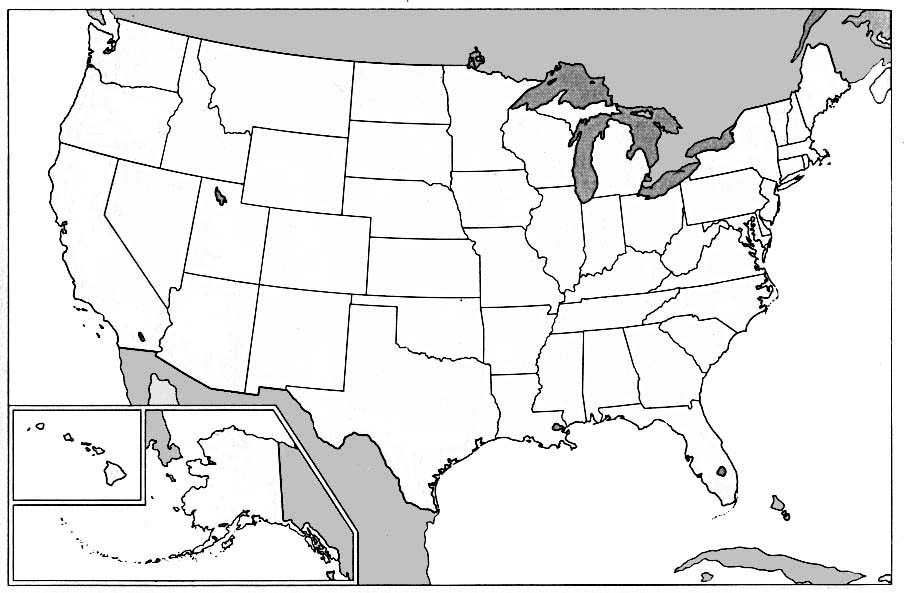
Print out copies of this United States map for each student and hand them one of these sheets that has items for their fronts foldable.After the students have constructed their foldable and put the matching pictures where they belong, have them create a made up front system using red and blue markers on the US map. When the interactive is complete, the student will have a definition, top and side views of both cold and warm fronts.


As the students are completing their foldables, be sure to circle the room and show each table the barometer, and share with them what it is used for. Clarify any questions.


Day 7: Satellite and Radar
Students will:
  • Use information from radar and satellite images to make weather predictions for their area;
  • Check the accuracy of internet weather predictions;
  • Summarize important information and use written communication skills to inform and report;
  • use technological skills to share information with others
Normally we only have one group sharing their map, but on this "final share" day, we will combine both the Satellite and Radar groups, both sharing their maps and questions/answers with the entire class before proceeding to the lesson planned. 


Today, students will do their best to think like meteorologists. I have found an excellent lesson plan which will allow them to do just that. We will start the lesson by asking "How do meteorologists predict the weather?" and we will discuss how they use tools that we have learned about in past lessons to perform their job. From here, we will go to CNN's website where we can view both satellite (cloud cover) and radar (precipitation) weather maps for our area. Have students make predictions about they think the weather will be like. Visit their predictions briefly over the next few days to see how the weather actually turned out.


Day 8: Clouds 
Students Will:
  •  Classify clouds by their characteristics
To start this lesson off, it is important to discuss with your students the importance cloud observing is to predicting the weather.  Once you have spent a few minutes doing this, the students are to go outside with their science journals or scrap paper if they do not keep a journal. This lesson will only work if there is some cloud coverage outside, so if there is not, feel free to swap this "Cloud Lesson" for another, for it is not time sensitive in the curriculum. Once the students are outside, in a space that allows them to spread out, they are to make small sketches and written observations of the clouds they see in the sky. After 10 minutes or so of observation, have the students come back into the classroom and discuss what they saw. After a short discussion, have the students put together the following foldable:

Foldable: To reinforce their knowledge of clouds, I have put together a really wonderful foldable for the students to use. First you want to print off a copy of the clouds with no labels and one with their labels for each student. In addition, give each student a vocabulary sheet that has terms found from the Weather Wiz Kids Webpage. Then, show the students how to make a three-tiered foldable shown below, so that we can cut-out and paste the clouds where they belong on each level of the troposphere.  On the outside of the three flaps, you want to have the students paste the clouds WITHOUT labels, while underneath, they place the pictures of the clouds with their appropriate labels. This requires a lot of cutting to make them fit, so consider cutting them ahead of time. Once both pictures have been properly pasted, cut lines between each separate cloud on each level. That way, the student can lift each cloud up to see what its label is below, without peaking at its neighbors. When this step is completed, have the students cut out the vocabulary terms and paste them on the top of the underside of the flap.


Homework: For homework, have the students complete the worksheet here (page 2). The answer sheet can be found on page 3 of the pdf. Encourage students to use their foldable to find the answers to the questions. Use this homework assignment to assess the students' knowledge.


Day 9: Hurricanes
Students Will:
  • Demonstrate the ability to define key words pertaining to Hurricanes
  •  Verbally recall conditions that must be present for a hurricanes to form
 This lesson will be conducted in a computer lab, as a "virtual field trip". Before you begin, be sure to remind students of lab rules and encourage them to ask questions. If you feel it to be best, you may want to have students work in pairs so that they can learn with one another 
Students will log onto the Virtual Field Trip website, found here. Have a student read aloud the front page (or do so yourself) while the other students follow along. Show students where to click to begin the field trip. Walk around the lab to ensure students are staying on task and understanding what is being asked of them to do.  During their language arts block, have students write a 5 sentence reflection on the webquest and assess it for knowledge gained. 

Day 10: Final Projects and Weather Millionaire
Students Will:
  •  express their cumulative weather knowledge
  •   share their final projects
On the final day of the unit, we will spend a few minutes sharing our final projects. This will not be a presentation, rather the students will leave their pamphlet or brochure on their desk and students will walk around looking at what their peers have completed. At the end of the day, their projects will be displayed around the room or on a bulletin board. 


After students share their projects, we will get together to play Weather Millionaire as a way to review the unit. 


Books
Hurricanes By: Seymour Simon. 2007. 32p. Collins, (9780061170720). Gr 2-4. 
This is an in-depth look at some of nature's most terrifying disasters: hurricanes. Students will be enthralled with the photographs and fascinating descriptions of these storms.  Read about how the storms develop, are predicted, and how they are categorized.

Lightning, Hurricanes,  and Blizzards: The Science of Storms By Paul Fleisher. 2010. 48p. Lerner Publications, (9780822575368). 
Here is a fascinating book from weatherwise. Students who get the opportunity to look at this book will get to explore an array of weather phenomena: storms, blizzards, lightning, and more. Readers will learn about the four Cs of weather: condensation, conversion, convection, and the coriolis effect. In addition to precipitation, topics such as air masses, air pressure, and fronts are also covered, making this an ideal book for this unit.

Oh Say Can You Say What's the Weather Today? By Tish Rabe Illus. By Aristioles Ruiz. 2004. 48p. Random House Books for Young Readers, (9780375822766).  Gr. K-4.
When searching for great weather literature for kids, your first thought may not Dr. Seuss. I personally found this book to be a delightful look into many of the topics covered in this unit. The intended audience is a little younger than fourth graders, which is why I feel it would be ideal to share it as an individual exploration or for a picture walk, definitely worth a look!

The Kids Book of Weather Forecasting By Mark Breen and Kathleen Friestaol. Illus. By Michael Kline. 2008. 144p. Ideals, (9780824968229). Gr 2-4.
I would recommend this book to the parents of your students who just can't get enough of the weather unit. Inside there are a number of great extensions from the information learned in this unit, as well as a handful of engaging experiments for students to try at home. 

The Man who Named the Clouds By Julie Hanna and Joan Holub. Illus. By Paige Billin-Frye. 2006. 40p. Albert Whitman & Company, (9780807549742), Gr 1-4. 
This book is unlike many picture books I have found in the past. Inside you will find the true story of meteorologist Luke Howard, the named "father of meteorology". Prior to reading the book, I took a lot of the knowledge inside for granted, I forgot that someone worked hard to discover it! Kids in your class will love reading about his scientific journey, looking at the beautiful pictures of different types of clouds, as well as learn about the different advances in meteorology throughout the last few centuries. 


The Science Spiders Investigate Air Pressure By Dr. Kain and Kathleen E. Kain. Illus. by the Author. 1999. 32p. Ranch Works, (9781892221056). Gr 2-4. 
I am so delighted to have found this science series. Dr. Kain clearly understands children; the only real way to get children to want to learn is to make the information meaningful to their own life. In this book, the science spiders guide you through small but fun science experiments that help to clarify air pressure. A perfect read, especially for your students who prefer a hands-on method to teaching. 

Tornado! The Story Behind these Twisting, Turning, Spinning, and Spiraling Storms By Judy and Dennis Fradin. 2011. 64 p. National Geographic Children's Book, (9781426307799). Gr 4-7. 
Here is a perfect book all about Tornadoes that is idea for your fourth grade (or upper elementary classroom). Since it was published by National Geographic, you know that there is an abundance of great photos inside.  The layout of this book is eye-catching, especially for your more reluctant readers. Students will learn about what causes tornadoes, the different categories, as well as some facts and records of the most notorious storms. 

Vapor, Rain, and Snow: The Science of Clouds and Precipitation By Paul Fleisher. 2010. 48p. Lerner Publication Group, (9780822575344). Gr 4-7. 
At nearly 50 pages, this book is chock full of information specifically about Clouds and precipitation, answered in a question-answer format. Inside students will be able to track the water cycle at every level, with plenty of descriptions and bold pictures along the way.

Weather (Eyewonder) By DK Publishing 2004. 48p. DK Children, (9780756603236). Gr 4-7. 
This is a great book to leave out at your reading station throughout the weather unit. There is great information about nearly every topic we cover in the ten days and students can use it as a jump-off point, or as a reference to complete some of their in-class tasks. The pictures inside are vibrant and definitely worth checking out. 

What Will the Weather Be? By Lynda DeWitt Illus. By Carolyn Croll. 1993. 32p. Collins, (9780064451130). Gr 1 -4. 
Here is a perfect example of how picture books can be a great educational tool, even in a fourth grade classroom. Although this text was intended for students of the 1st to 3rd grade ranges, many of the terms are more complex and probably wouldn't be understood until 4th. Throughout the unit, we discuss different weather tools and this book can be a great assistance to students who need further explanation of them.


Web Resources
Interactive Weather Maker
Students can play with three different variables to change the weather of a scene: Relative Humidity, Poleward Temperature, and Equatorward Temperature. Students will see that there are multiple factors into determining what the weather will ultimately be like. 


Tree House Weather Kids
Here is a site that your students will surely enjoy. They will be able to learn more about a variety of topics such as air pressure, seasonal changes, clouds and temperature. They also have great activities. I especially like the ID a Cloud Activity, which would be perfect for review. 


Weather Mazes (Click on both words - there is a maze under each link!)
The Weather Channel has put out two great weather mazes that students can guide their cursor through. They are actually quite challenging and offer some great information as students are trying to find their way through. 


Weather Science Projects
Due to time constraints, we are unable to make all of the different types of weather instruments during the unit. This is a great website for kids to go on with their parents so that they can learn to make instruments on their own such as a rain gauge and a coffee can barometer. 


Weather Wiz Kids
I love this website as a tool for students to complete both their group projects as well as their individual projects. Inside they will find a ton of great descriptions, definitions, pictures, experiments and much much more. This is a fantastic website for students and teachers to use!

Virginia Standards of Learning
4.6  The Student will investigate and understand how weather conditions and phenomena occur and can be predicted. Key concepts include:
a) weather phenomena
b) weather measurements and and meteorological tools; and
c) use of weather measurements and weather phenomena to make weather predictions

Curriculum Framework
  • Temperature is the measure of the amount of thermal energy in the atmosphere.
  • Air pressure is due to the weight of the air and is determined by several factors including the temperature of the air.
  • A front is the boundary between air masses of different temperature and humidity.
  • Cirrus, stratus, cumulus, and cumulonimbus clouds are associated with certain weather conditions.
  • Cumulus clouds are fluffy and white with flat bottoms. They usually indicate fair weather. However, when they get larger and darker on the bottom, they become cumulonimbus clouds.  Cumulonimbus clouds may produce thunderstorms.
  • Stratus clouds are smooth, gray clouds that cover the whole sky (block out direct sunlight). Light rain and drizzle are usually associated with stratus clouds.
  • Cirrus clouds are feathery clouds. They are associated with fair weather. Cirrus clouds often indicate that rain or snow will fall within several hours.
  • Extreme atmospheric conditions create various kinds of storms such as thunderstorms, hurricanes, and tornadoes.
  • Different atmospheric conditions create different types of precipitation.
  • Meteorologists gather data by using a variety of instruments.
  • Meteorologists use data to predict weather patterns.
  • A barometer measures air pressure
  • An anemometer measures wind speed.
  • A rain gauge measures the amount of precipitation.
  • A thermometer measures the temperature of the air.

Monday, November 28, 2011

Annotated Bib - Weather

When teaching about weather, it's important to focus on both the cause and effect. The books and websites below are great resources for learning about what makes weather phenomena happen and how it affects our world as well as how we use history, patterns, and technology to forecast weather. The age-appropriate content, interactive games and simulations, and hands-on experiments contained in these resources are perfect for a second grader learning about weather phenomena.

Books on Weather Phenomena and Forecasting

100 Things You Should Know About Weather. By Clare Oliver. Illus. by Mark Davis. 2002. 48 p. Mason Crest Publishers. (978-1842363584). Gr. 2-5.
The title says it all for this book-- it's chock full of fun facts about weather. However, the facts are organized into categories, making it a comprehensive resource for weather knowledge. Each topic is covered in a two page spread which means the book covers a wide variety of weather concepts. I like the book because it dives into fascinating weather topics that students wouldn't normally learn too much about such as deep freezes, rainbows, and even weather myths from groups such as the Vikings and the Mayans. The book is a fun addition to a lesson about weather and contains a ton of amazing facts that are bound to amaze kids and adults alike.


The Big Storm. By Bruce Hiscock. Illus. by the author. 1993. 46 p. Atheneum. (978-1590786000). Gr. 1-4.
A comprehensive look at how a storm develops and moves, this book is an amazing resource for teaching about weather. It follows a large springtime storm in 1982 as it moves from rain in the Pacific Northwest to a blizzard in the Sierras to tornados and hail in the Texas plains and finally becomes a blizzard in New York City. As the storm rolls on, the book explains what's causing it to evolve and how meteorologists can forecast what will happen next. It's a great book for helping students understand how weather events are related and why they occur.


I Face the Wind. By Vicki Cobb. Illus. by Julia Gorton. 2003. 40 p. Harper Childrens. (978-0688178406). Gr. Pre-K to 2.
This is a wonderful introduction to what wind is and how it works. It even debunks the popular idea that air weighs nothing. Readers simply need a few materials (a plastic bag, a hanger, balloons, etc.) in order to conduct the series of basic experiments within the book. Between experiments, readers are offered explanations of how wind does what it does and how we experience it. The simplicity of the language combined with the great illustrations and easy-to-do science experiments make this book a wonderful resource for teachers and parents alike.


The Kids' Book of Weather Forecasting. By Mark Breen and Kathleen Friestad. Illus. by Michael Kline. 2008. 144 p. Williamson Publishing. (978-0824968236). Gr. 2-5.
This book was penned by two meteorologists and is filled with simple weather forecasting experiments for kids. It opens with directions on keeping a weather log and does a great job of provoking kids to make observations and predictions about the weather based on a series of questions. The rest of the book contains a ton of weather forecasting experiments, fun facts about weather, and Q&A with the meteorologists who wrote the book. It's a really fun way to get students to think differently about weather predicting and experiment to better understand it.


Rain, Hail, and Snow. By Trudy Strain Trueit. 2002. 64 p. Franklin Watts. (978-0531162187). Gr. 2-4.
This book is a great alternative to a textbook when teaching about precipitation. The language is simple but it's full of important vocabulary words and even contains a useful glossary at the end. The photography is also spectacular, from super magnified snowflakes to a forest destroyed by acid rain. I prefer this book to a textbook because it details all states of precipitation, notably in their extreme forms. The language, photographs, and fun facts help make this book a great introduction to this topic for young students.


Useful Websites

Discovery Online: Storm Chasers
This enthralling game puts players behind the wheel of a storm chaser vehicle as it trails a destructive tornado. It's a fun look into the life of a storm chaser and a great way for kids to see how unpredictable the path of a tornado can be.

Ready.Gov: Kids
This site was created by the government to inform and prepare families for emergencies caused by extreme weather events. It's a great resource in classrooms where there is a threat of weather phenomena such as tornadoes and floods. It does a wonderful job of explaining weather events and talking about why and how we have to be prepared for them. Complete with games, checklists, and even teacher and parent materials, it's a great resource for mentally and physically preparing children for extreme weather events.

Scholastic Interactive Weather Maker
This interactive simulation gives kids a chance to play around with weather conditions to create various weather phenomena. As kids adjust the temperature and humidity, they watch the weather change around a little red house. The best part is that in addition to the weather animation, kids are also provided with a little explanation as to why the weather changed when the adjustments were made. It's an interesting way to help kids understand what is involved in changing weather.

Weather Channel Kids: Weather Ed
The teacher's resources section of the Weather Channel Kids website offers a variety of teaching resources such as lesson plans, interactive games for the classroom, and a weather encyclopedia. The games are especially great, with advanced graphics and thought-provoking challenges.

Weather Wiz Kids
A site created by meteorologist Crystal Wicker, Weather Wiz Kids is a comprehensive source for information on all types of weather phenomena. In addition to pages on types of weather that contain imagery and simple language, the site has weather experiments, jokes, folklore, and a Q&A section. The site also contains plenty of materials for teachers like flashcards and games. It's a great resource for students and teachers alike.

For Teachers

Virginia Standards of Learning 2.6 
The student will investigate and understand basic types, changes, and patterns of weather. Key concepts include
a) identification of common storms and other weather phenomena;
b) the uses and importance of measuring, recording, and interpreting weather data
  • Earth’s weather changes continuously from day to day.
  • Changes in the weather are characterized by daily differences in wind, temperature, and precipitation.
  • Precipitation occurs when water, previously evaporated, condenses out of the air and changes its phase from a gas to a liquid (rain) or to a solid (snow or sleet).
  • Extremes in the weather, such as too little or too much precipitation, can result in droughts or floods.
  • Storms have powerful winds, which may be accompanied by rain, snow, or other kinds of precipitation.
  • Weather data are collected and recorded using instruments. This information is very useful for predicting weather and determining weather patterns.
  • Scientists collect weather data over time to study trends and patterns. These trends and patterns help them to make future weather predictions.

Wednesday, November 2, 2011

Unit Resource Portfolio: Weather

Weather

During their second grade year, students learn in-depth about the weather. SOL 2.6 builds on previous SOLs in Kindergarten and First Grade, through which students have already learned about observing weather and the ways basic weather concepts such as heat, light and precipitation affect human beings and other living things. In second grade, students expand on their knowledge by investigating and observing different types of weather and weather patterns.


Weather is one of the most dynamic and interesting scientific subjects. Weather patterns change every day, based on wind, temperature and precipitation and weather affects everyone. Extremes in these components of weather can cause droughts and floods and significantly impact our lives. It is important to collect weather information using scientific instruments so that weather patterns and changes can be observed and predicted. Storms are an example of extreme weather that humans work hard to observe and predict. There are many types of storms including thunderstorms, tornadoes and blizzards.

In this portfolio, teachers will find a comprehensive instructional plan for an entire science unit on weather. The instructional plan uses hands-on activities and literature that will engage students in the study of weather and also includes straightforward methods of assessment for the unit. Examples of foldables are included as well, along with several web resources that will enhance understanding and interest for students.


SOL 2.6 The student will investigate and understand the basic types, changes, and patterns of weather. Key concepts include:
a) Temperature, wind, precipitation, drought, flood, and storms; and
b) the uses and importance of measuring and recording weather data.


Important Vocabulary:
  • weather - the state of the atmosphere at a given time or place; includes temperature, moisture, wind speed, and pressure
  • wind - the perceptible, natural movement of air
  • temperature - the degree of heat present in an object or the atmosphere
  • precipitation (rain, sleet, snow, hail, ice) - rain, snow, sleet or hail that falls to the ground; temperature determines the type of percipitation
  • evaporation - the process of becoming a vapor
  • condensation - water that collects as droplets
  • thermometer - an instrument ofr measuring temperature
  • rain gauge - an instrument for measuring percipitation
  • anomometer - an instrument for measuring the speed of wind
  • hurricane - a severe storm having sinds greater than 74mph
  • tornado - a mobile vortex of violently rotating winds with the appearance of a funnel-shaped cloud
  • blizzard - a sever snowstorm with high winds and limited visibility
  • thunderstorm - a storm with thunder or lightning and typically heavy rain or hail
  • drought - a prolonged period of abnormally low precipitation; a shortage of water results from this
  • flood - an overflowing of a large amoutn of water beyond its normal confines, especially over what is normally dry land

Instruction Plan


Day 1: What is weather?
Begin the class by gathering students on the reading rug. Ask the students, “What is weather?” Allow time for several responses. Weather is the state of the atmosphere – there can be many variations in weather, including differences in temperature, wind and precipitation. Ask the students, “What kind of words do we use to describe the weather?” Read the book “Weather Words and What They Mean” by Gail Gibbons. After allowing time for questions, instruct students to get a clipboard, “Weather Observations” handout and pencil. Take the students outside and walk around – ask them to write down as many words as they can think of to describe today’s weather. Show them a previously-placed thermometer and have them record the temperature. Upon returning to the classroom, gather students on the reading rug again and ask them to tell you their words. List the words on a large piece of chart paper labeled “weather words.” Explain that each day of the unit on weather, they will be asked to describe the weather and come up with new words where applicable. In the unit, they will learn about different types of weather, weather patterns, and even how to observe and record weather data.

Day 2: Precipitation
Gather students on the reading rug and read “Splish! Splash!: A Book About Rain,” by Josepha Sherman. Rain is a type of precipitation. Ask the students, “What is precipitation?” Precipitation occurs when water that is evaporated into the atmosphere (becomes a gas) is transformed back into a liquid (or a solid) through condensation and falls back to earth. Draw a simplified water cycle on the board and guide students through making their own. Ask the students, “What other types of precipitation are there? What other differences in weather can we observe when it snows vs. when it rains, or when it hails vs. when it rains?” (temperature, season). Guide the students in creating a precipitation foldable (see handouts). End the lesson by taking students outside to observe the weather and then adding any necessary words to the Weather Words chart.

Day 3: Precipitation
Students will then create a simple terrarium so that they may observe the water cycle/precipitation in action. (see instructions) The terrarium will be made in groups of four out of a jar with a tight-fitting lid, soil, pebbles and water. Students should leave their terrariums on a window sill upon completion. Students will observe changes in their terrarium over the next few days. Each student should receive a hand-out on which to record their observations. After students have created their terrarium, gather them again and ask, “How can we measure precipitation?” We can measure rain with a rain gauge. After explaining how a rain gauge works, take students outside so you can place a rain gauge and so that they can write down the day’s weather observations. End the lesson by adding any necessary words to the Weather Words chart paper.

Day 4: Wind and Anemometers
Gather students on the reading rug and ask the students, “Is it windy today? How can you tell?” Read the book “Feel the Wind” by Arthur Dorros. We feel the movement of air as wind. We describe wind in terms of its speed (how fast it is moving) and its direction. One of the ways that wind was measured historically was by using a wind vane. Show students an example. A wind vane is also known as an anemometer. Students will then create their own anemometer using a pencil, pushpin and Dixie cups. (see instructions) After all students have constructed their anemometers, take them outside with their weather observation sheets and their new anemometers so that they can record observations and any new words. Instruct them to use their anemometer to inform their observations on the wind (Did the anemometer move? How fast? Etc.).

Day 5: Clouds
Begin the lesson by asking students to describe the different clouds they see in the sky. Ask the students, “What are clouds made of?” Clouds are made up of water that has gone through condensation after evaporation and has turned back into a liquid. All forms of precipitation fall from clouds. There are many different types of clouds. Display pictures of different types of clouds and lead students through the characteristics of each. Guide students through the creation of a foldable about the different types of clouds – stratus, cumulus, nimbus, etc. Then, instruct students to take a towel that they have brought from home and their interactive notebook outside. Once outside (weather permitting), students will lie on the ground and observe the clouds in the sky. Students will describe the clouds they see and try to identify them based on the characteristics listed in their foldable.

Day 6: Storms
Gather students and begin the discussion on storms by asking,” Have you ever experienced a storm? What type of storm was it?” Emphasize that there are several different types of storms that we experience from year to year in Virginia. Storms typically vary by the season and are characterized by extremes in wind and precipitation. Show video examples of storms listed below. After each video clip, define each type of storm and when during the year it typically occurs – hurricane, tornado, blizzard and thunderstorm. After students see videos of each, they will create a foldable with important information about each storm – see picture. Take students outside to observe the weather to end the lesson.

Day 7: Weather Extremes
Gather students and begin the discussion by asking, “What happens when it keeps raining and raining for days or weeks? Have you ever experienced something like that? What about when it doesn’t rain for days or weeks?” We talked yesterday about different types of storms – these are also examples of weather extremes, which occur when much greater or much less than average precipitation, temperature or wind occurs over an extended period of time. Some common weather extremes include droughts and floods. Show students video/news footage of droughts and floods. Hand out chart labeled “Drought” and “Flood” (see handout) and guide students through listing differences between the two. Take students outside to observe the weather to end the lesson.

Day 8: How Weather Affects Us
Gather students and begin discussion by asking, “In what ways does weather directly affect you and your day to day life?” There are a variety of ways that weather changes how we go about our daily lives. It affects our clothing and activity choices. Lead the students in a game called “Mystery Vacation.” Pretend to unpack a suitcase with different articles of clothing and necessary items for activities that are specific to certain types of weather. Invite students to test their classmates as a large group or in smaller groups. Explain to students that weather also affect what people do for a living and what food we eat. Guide students in creating a foldable (see below) to demonstrate how weather affects these four aspects of life: clothing, activities, livelihood, food. Take students outside to observe the weather at the end of the lesson.

Day 9: Predicting the Weather
Gather students and begin the lesson by reading “Weather Forecasting” by Gail Gibbons. A meteorologist is someone who observes and records weather information and uses it to predict the weather. We see meteorologists on television, but they work behind the scenes too. Let’s be meteorologists! First, take students outside to observe the weather as before. Upon returning to the classroom, students should look back over their notes on temperature, wind, and cloud cover/precipitation descriptions. Have the students tell you their observations for each day while you graph it on chart papers at the front of the room. Use student volunteers to help you. Once you have graphed their observations, invite students to make predictions for tomorrow and the rest of the week’s weather. Use Google Earth to view the weather satellite view of the Earth. While viewing Google Earth, ask students if they’d like to edit any of their predictions. Use Google Earth to view the weather in several locations around the world.

Day 10: Review
Lead students through a review of their unit on weather by playing a game of “Weather Jeopardy.” Students will play in three teams, with two rounds. Every student will answer the Final Jeopardy questions individually with the opportunity to win extra points for their team. Each student who answers the Final Jeopardy question correctly will receive two extra points on their test. For questions and points values, see link to this PowerPoint.

Literature Connections

Feel the Wind by Arthur Dorres. (1990) 32p. Collins, (9780064450959). Gr. K-3.

This fun book simplifies facts about wind so that they are easy to understand. Children will learn about what causes wind, its place in weather, and how we can use it. There are also instructions on how to make your own anemometer.


How the Weather Works: A Hands on Guide to Our Changing Climate by Christiane Dorion. (2011) 20p. Templar, (9780763652623). Gr. K-3.


In this book, Dorian presents complicated information about the science of weather and breaks them down into manageable pieces of information for children. This book also delves into climate change, and how humans are affecting such changes on the earth and atmosphere. There are also experiement suggestions in this book.


Hurricanes! by Gail Gibbons. (2010) 32p. Holiday House, (9780823422746). Gr. K-3.

In this books, Gibbons presents information about hurricanes in a kid-friendly way, with interesting water-color images and simple facts about the different types of hurricanes, where they occur, and how meteorologists predict them. Gibbons also includes information on what to do if a hurricane threatens your area.


Oh Say Can You Say What's the Weather Today? All About Weather by Trish Rabe. (2004) 48p. Publisher, (9780375822766). Gr. K-3.


This book is written in the Doctor Seuss-style, and promises to be a fun read about weather. In the book, the Cat in the Hat and his friends travel up by hot-air balloon and expreience different types of weather. The book also gives information on different types of weather instruments.


Splish! Splash! A Book About Rain by Josepha Sherman. (2006) 24p. Picture Window Books, (9781404803398). Gr. K-3.


This book uses fun pictures and simple vocabulary to explain where rain comes from and why rain is important to the earth and to humans. Sherman also delves into what happens when too much rain (flooding) or not enought rain (drought) occurs.


The Magic School Bus Kicks Up a Storm: A Book About Weather by Nancy White. (2000) 32p. Scholastic Paperbacks, (9780439102759). Gr. K-3.

This book reads like many other books in the Magic School Bus series - the characters learn about a concept by experiencing it first-hand in an adventurous and exciting way. To learn about weather, the bus is turned into a water droplet, and students also experience different types of precipitation and learn about wind.


Tornadoes! by Gail Gibbons. (2010) 32p. Holiday House, (9780823422746). Gr. K-3.

Much like her book on hurricanes, Gibbons uses fantastic water-color pictures and simplified facts to convey information about tornadoes to children. Gibbons reviews how tornadoes form, their classification system, and even gives children instructions on what to do if a tornado is in their area.


Weather Forecasting by Gail Gibbons. (1993) 32p. Aladdin, (9780689716836). Gr. K-3.


In this book, Gibbons takes children through the four seasons and the weather that is associated with each one. She uses meteorologists at a weather station to explain how seasonal weather is predicted, observed and recorded. Some of the terms may be complicated for children, but Gibbons breaks them down so that they are easier to understand.


Weather Words and What They Mean by Gail Gibbons. (1992) 30p. Publisher, (9780823409525). Gr. K-3.

This is a great book to use in order to review weather concepts and vocabulary. Teachers could also use this book as an introduction to a unit on weather. Gibbons includes different types of precipitation, weather instruments, temperature and much more. She even gives students a page of interesting facts about weather.


What Will the Weather Be? by Lynda Dewitt. (1993) 32p. Publisher, (9780064451130). Gr. K-3.


This book is also a good book to use as an introduction to a weather unit, particularly when teaching students about how weather is predicted. Dewitt reviews with children how weather can affect our daily lives and decisions and why experts work so hard to predict it.


Web Resources
Dan's Wild Weather - Clouds
This page about clouds is part of a larger website about weather created by meteorologist Dan Satterfield. The cloud page has a gallery of pictures of clouds and defines the different types of clouds. Satterfield also gives information on how clouds form in the sky and offers different cloud-related activities to use in the classroom.

FEMA Kids Disaster Preparedness
This website gives kids information on how they can help their families prepare for weather-related disasters including tornadoes, hurricans, floods, and tsunamis. Information is given on what to include in an emergency kit, how to develop a family plan, and facts about different types of disasters.

Scholastic Interactive Weather Maker
This webpage gives students the opportunity to control the weather using humidity and temperature. They must follow a couple of guidelines, but as they make changes, they are given information on why their changes caused the type of weather they see.

The Weather Channel
This website, which is the kids portion of the main Weather Channel website, gives students opportunities to engage in a variety of weather-related activities. Students can type in their location to see the weather forecast for their area, look up difficult weather concepts in a weather encyclopedia, play weather games and learn about climate change. This website also gives information about how to prepare for any type of weather.

Weather Wiz Kids
This websire was created by meteorologist Crystal Wicker to teach children about weather. The website contains information about a large variety of weahter concepts including different types of storms, precipitation, and temperature. Wicker also includes information on weather safety as well as weather games and flashcards for review.


Assessments
  1. Weather observations rubric
  2. Drought/flood chart rubric
  3. Jeopardy game
  4. Precipitation foldable
  5. Cloud foldable
  6. Storm foldable