Showing posts with label counting. Show all posts

Thursday, April 18, 2013

Counting Coins and Skip Counting

I'll be getting a new work computer in June, so I've slowly been trying to clean up my files. I'll admit that I've been pretty lazy and my download folder is a HUGE mess. (Translation: I have more 5000+ files to review!) This means that as I try to figure out what to keep and what to trash that I've run across some interesting things. When I came across coin images from ClipArt ETC, I decided to create these simple coin counting forms.
Download Counting Coins.

I hope you get a chance to use these in your home or classroom. Please let me know if you try these and how they work! 

Tuesday, May 15, 2012

Math Freebie - How Many Spots?

This week's Monday Math Freebie is coming a day late and a dollar short, but it's here!

This week's freebie is a counting activity. First print and laminate the set of 8 giraffes. Each one has different numbers and colors of spots. Using the recording sheet, students count the spots and write them as tally marks and the number. 

The file includes directions, a recording sheet, and a set of printable giraffes.

Download How Many Spots?.

Please note that these materials were developed and adapted from an idea seen at Mrs. Lee’s Kindergarten. Thank you Mrs. Lee!

Monday, November 14, 2011

Annotated Bib - Counting

Number sense is vital for children to learn in order to build their understanding of other mathematics concepts. Number sense refers to recognizing, representing, and writing numbers. It also refers to classifying, counting, relationships among numbers, and numeration of numbers. The following books focus on teaching counting to the kindergarten level.

Books
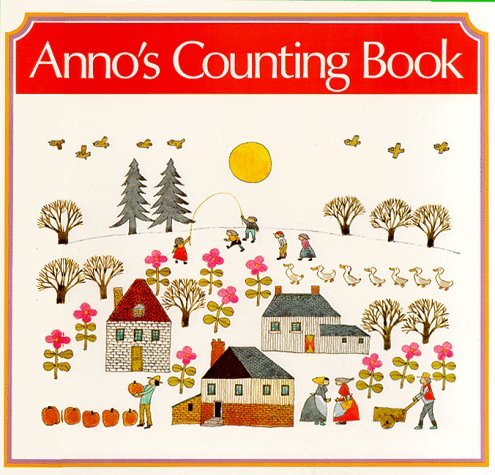
Anno's Counting Book By Mitsumasa Anno. Illus. by Mitsumasa Anno. 1986. 32p. HarperCollins, (9780064431231). Gr. K.
This is a wordless, picture book that teaches counting through beautiful watercolors. The book depicts a town through the course of a year and the objects in each scene are to be counted by the reader.

How Do Dinosaurs Count to Ten? By Jane Yolen. Illus. by Mark Teague. 2004. 12p. Blue Sky Press. (9780439649490). Gr. K.
This book teaches counting from numbers 1 to 10. The author uses rhyming, humorous text to show how dinosaurs count to ten. The dinosaurs count over and over again in different ways, using repetition as a great teaching tool.

One is a Snail, Ten is a Crab By April Pulley Sayre and Jeff Sayre. Illus. by Randy Cecil. 2006. 40p. Candlewick Press, (9780763626310). Gr. K-2. This creative book teaches counting and offers practice through many living things and their feet! One is a snail, two is a human, and it goes on until 100. There are dogs, insects, and so many more lively creatures incorporated into the story.

Ten Apples Up On Top! By Dr. Seuss. Illus. by Roy McKie. 1961. 72p. Beginner Books, (9780394800196). Gr. K. This is a wonderful book written using only 75 vocabulary words, that teaches young children to count and read simultaneously. The story is about a number of animals trying to carry ten apples on their head and the crashes involved in this challenge. The book is written in rhyme which adds even more fun to the experience and can help with the readers remember the story and lessons.

Ten Black Dots By Jane Donald Crews. Illus. by Donald Crews. 1986. 32p. Greenwillow Books, (9780688060671). Gr. K. This book was previously published in 1968, and republished with some added changes that makes the book a bit more appealing. The book uses simple rhymes and everyday objects to teach counting for beginners.

Websites
7 Ways to Teach Counting
This resource provides 7 ways to teach counting to ESL students. There are seven activities listed that may seem familiar, but are effective and creative ways for English language learners to become familiar with counting and relate it to everyday life. These lessons can also be applied to all learners.
Have Fun Teaching
This website provides a bank of songs and chants teachers can use to present teaching numbers and counting to kids. This is a great tool to help the lesson of counting fun and provide easy ways for students to remember their counting and number facts. There is a song for counting by many different numbers for different levels (i.e. - counting by two's and counting by twenties and many in between).
Kindergarten Lessons
This site is dedicated to teaching kindergarten. The site provides resources on other subjects, but dedicates an entire one to teaching math. The site provides information on how to teach what, manipulatives, vocabulary, and much more. This site goes directly to the number sense lesson.

Learning Games - Number Sense
This website offers many interactive as well as printable games to help children learn. This particular link is directly to the page that focuses on teaching and learning number sense. There are many categories such as games, songs, and videos. This is a great tool to use in your classroom to have kids learn and practice number sense. It can also be suggested to parents to utilize outside of school as reinforcement.
Smart First Graders - Number Sense
This website was created by a coordinator of after school programs who saw a need. She saw a need of students who just did not "get it" at the end of the day. They needed more help and time and the parents and teachers wanted to give that to them, but weren't always able to or did not know how. That is when she created this site. It has a great deal of information, activities, and lessons that include everything a first grader should know in a fun, creative approach. This can be helpful for many teachers as it includes a wide variety of subjects and information that can be used in other grades. The link is directly to the number sense portion of the site.


For Teachers
Virginia Standard of Learning


K.2 The student, given a set containing 15 or fewer concrete objects, will

a) tell how many are in the set by counting the number of objects

b) write the numeral to tell how many are in the set; and

c) select the corresponding numeral from a given set of numerals


Background Information from Curriculum Framework

  • Counting involves two seperate skills, verbalizing the list of standard number words in order ("one, two, three,...") and connecting the sequence with the objects in the set being counted, using one-to-one correspondence.
  • Association of number words with collectings of objects is achieved by moving, touching, or pointing to objects as the number words are spoken.
  • Objects may be presented in random order or arranged for easy counting.
  • Kinesthetic involvement (e.g., tracing the numbers, using tactile materials, such as sand, sandpaper, carpeting, or finger paint) facilitates the writing of numerals.
  • Articulating the characteristics of each numeral when writing numbers has been found to reduce the amount of time it takes to learn to write numerals.
  • Zero (0) is both a number and a digit. As a number, zero plays a central role in mathematics as the additive identity of the integers, real numbers, and many other algebraic structures. As a digit, zero is used as a placeholder in systems.
  • Conservation of number and cardinality principle are two important milestones in development to attaching meaning to counting.
  • The cardinality principle refers to the concept that the last counted number describes the total amount of the counted set. It is an extension of one-to-one correspondence.

Tuesday, October 25, 2011

Annotated Bib - Addition

Addition is one of the most basic and essential mathematical operations. It is defined as combining more than one set to create a different number. The sum is not always larger than both the addends because negative numbers can be used in addition equations. The plus sign (+) signifies addition, and it is commutative, meaning the order of the addends does not matter; the sum will still be the same.

Books
Addition the Fun Way Book for Kids: A Picture Method of Learning the Addition Facts by Judy Liautaud. Illus. Val Chadwick Bagley. 1996. 92p. (9781883841348). Gr. K-2.
With illustrations teaching the 0's-9's addition facts, children will learn addition through cartoons and a story.


Animals on Board by Stuart J. Murphy. Illus. R.W. Alley. Steck-Vaughn. 1999. 32p. (9780739825419). Gr. K-2.
Jill and her dog ride in a truck and are passed by other trucks carrying animals. Join in on the addition fun by adding the number of animals on each truck.

The Hershey's Kisses Addition Book by Jerry Pallotta. Illus. Rob Bolster. 2001. 32p. (9780439241731). Gr. K-2.
Children will love learning basic addition concepts with this fun and clever book, as a cast of clowns struggle under the weight of life-sized hershey kisses.


The
Mission of Addition by Brian P. Cleary. Illus. Brian Gable. 2007. First Avenue Additions, (9780822566953). Gr. K-2.
A group of monsters explore what addition is, and how to use it. Children will not only learn how to add by reading this book, but they will see how addition is used in everyday life.


1+1=5 and Other Unlikely Additions by David LaRochelle. Illus. Brenda Sexton. 2010. Sterling. 32p. (9781402759956). Gr. K-2.
A variety of animals and people explore different types of addition problems, including 1 unicorn horn + 2 goat horns = 3 horns. By reading this book, children will see how addition is used in everyday life.


Websites
Serve aliens lunch when they come up to the table. Solve each addition problem, and serve them the food that corresponds with the sum.

Click on a key and solve the given addition problem to unlock each color. After all problems are answered correctly, color in the vacation picture with the colors you've unlocked.
Help collect the scattered sheep by mentally solving the given addition sentences. But you have to be quick with solving the problems because the sheep are constantly moving!

Help Lucy get all her friends dressed and prepared to shoot a movie. Every ten addition problems solved correctly allows you to dress one of her friends.

Earn hats and clothing for the snowmen by solving basic addition problems. Students are allowed to choose specific number families to work with, or groups of number families to help target their weaknesses.

For Teachers
VA Standards of Learning
1.5: The student will recall basic addition facts with sums to 18 or less and the corresponding subtraction facts.

Background Information from Curriculum Framework:
•
Associate the terms addition, adding, and sum with the concept of joining or combining.
• Provide practice in the use and selection of strategies. Encourage students to develop efficient strategies. Examples of strategies for developing the basic addition and subtraction facts include
– “one-more-than,” “two-more-than” facts;
– “doubles” to recall addition facts (e.g., 2 + 2 =__;
3 + 3 =__); – “near doubles” [e.g., 3 + 4 = (3 + 3) + 1 = __]; – “make-ten” facts (e.g., at least one addend of 8 or
9);
– use of the commutative property, without naming
the property (e.g., 4 +3 is the same as 3 + 4); – use of related facts (e.g., 4 + 3 = 7 , 3 + 4 = 7, 7 –
= 3, and 7 – 3 = 4); – use of the additive identity property (e.g., 4 + 0 =
4), without naming the property but saying, “When you add zero to a number, you always get the original number.”; and
– use patterns to make sums (e.g., 0 + 5 = 5, 1+4=5, 2+3=5,etc.).

Sunday, October 2, 2011

Annotated Bib - Count Down 10 to 1

The following collection of books have been selected to aid teachers in helping students develop the understanding of counting backwards. The grade level focus are geared towards K -2. Each book was chosen for it's illustrations, versatility, and ease of use. The versatility stems from the ability to use these books for counting 10 to 1, as well as, cross curricular applications for Language Arts and Science make these a must have for any classroom library.

Countdown to Kindergarten, by Alison McGhee, 2002, 32 pages, Harcourt Children's Books. (978Ten days before kindergarten starts, a dark-haired girl wakes up in a panic. "I've heard from a first grader that they have a lot of rules there," she confides, locking eyes with the audience. "You have to know how to tie your shoes. By yourself." Days nine, eight, seven and so on bring various shoelace disasters. As the 10 days before school wind down, she worries that she will be labeled "Velcro Girl" and finds endless ways to cover the gap in her skills through the destruction of her shoes and/or laces. Bliss presents the heroine with large-eyed innocence and humorous details.0152025168). Grades K-2


Countdown to Fall, by Fran Hawk. Illus. by Sherry Neidigh, 2009, 32 pages,  Sylvan Dell Publishing. (978-1607180395) Grades K-2
An informational picture book, emphasizing on trees and animals. A wonderful  book for teaching students to countdown from 10 to 1. As the facts about trees  count down, the images represent the numbers 10 to 1, while corner insets  show the tree, spring and fall leaves, a seed, and occasionally the flower of the  specific tree pictured, such as birch, dogwood, oak, and maple. Children will be  drawn to examine the expressive images of animals and find additional ones  along the detailed border featuring close-ups of the tree's bark. This attention  to detail makes the book more than a simple counting or seasonal book.

Count to 10 and Back Again: San Diego Zoo, by J.R. Brent Ritchie. Photo. By San  Diego Zoo. 2004, 14 pages, Candy Cane Press. (978-0824965525) Grades K-2.
A creative book for counting down from 10 with the ability to flip the book over  and count up from 1 to 10.Each number is connected to a corresponding  number of animals. The photographs are courtesy of the San Diego Zoo and  sure to delight the curiosity of any child.


One Was Johnny Counting Book, by Maurice Sendak, 1991, 48 pages, Harper  Collins. (978-0064432511). Grades K-2
From the brilliant mind and creator of "Where the Wild Things Are", comes a  beautifully illustrated tale about a kooky little kid, and crazy animal friends.  Nine arrive, and to get back to his solitude, Johnny counts backwards to make  them leave. But what will happen if they refuse to leave? Read on and find out  for yourself.


Ten Pup's Up, by Marsha Wilson Chall. Illus .by Henry Cole . 2010, 32 pp, Margaret K. McElderry Books. (ISBN 1416979603) Grades K-2

This picture book is great for Kindergarteners learning to count from 1 to 10 and back down again. The story begins with one pup waking up to start his day, then one by one, his siblings awaken until all ten are running about both playful and mischievous. Beautiful illustrations fused with colorful text, coupled with number words, numerals, and pictorial representation for one-to-one correspondence make this a must have in your classroom library.


The following links are internet bases sources of FREE lessons and games that will help teachers plan and supplement their number sense lessons dealing with counting down from 10. Fortunately for us, some sites include a wealth of information and links to more FREE online help.

This lesson is outlined in detail for a series of engaging activities to help students with the concept of counting down from 10 to 1.

Ok, the game for this particular activity is a little rudimentary BUT it is more engaging than a worksheet and can compliment what the students have learned using concrete manipulatives. The site is full of free lessons and activities for PK - middle school.

A simple point and click activities that would be great for a newcomer to number sense. The game begins with 10 written numerically and the written word. On the next line is a box with minus 1 (-1). The student clicks on the minus one ant the ten on top is converted to nine. This is repeated until the student gets to one. To reinforce concepts, the teacher can use this activity by starting with any number between and including (10 through 2) and have the student predict what number will be next when you take away one.

www.abcya.com - counting fish
Here is a great activity for teaching K-1 students basic number sense by using one-to-one correspondence to relate an object set to the correct numeric value. I thought this activity could be enhanced by instructing the students to count down from the identified number (or from 10 to the identified number) as a way to assess understanding of concepts.

For Teachers:
Virginia SOL - K.4 The student will
a) count forward to 100 and backward from 10;
b) identify one more than a number and one less than a number
Background Information from the Curriculum Framework
  • Counting skills are essential components of the development of number ideas; however, they are only one of the indicators of the understanding of numbers.
  • Counting backward by rote lays the foundation for subtraction. Students should count backward beginning with 10, 9, 8,¼ through ¼3, 2, 1, 0.
  • Counting forward and backward leads to the development of counting on and counting back.

Tuesday, September 20, 2011

Annotated Bib - Counting

Number sense is the ability to use numbers and understand their specific values. Whether a student is counting by 1's or estimating a value, they are using number sense. Recognizing benchmark numbers, such as 10 and 50, is also considered number sense. Students begin to learn number sense at a very early age. Students learning number sense typically are in kindergarten to second grade.

Books:
Best Counting Book Ever by Richard Scarry. Illus. by the author. 2010. 44p. Sterling, (9781402772177). Gr K-2.
Willy Bunny practices counting when his dad tells him to count everything he sees. Willy begins by counting one bunny, two eggs, and make his way up to 100! Children will love counting with Willy by reading this fun-filled book.

How Many Bugs in a Box? by David Carter. Illus. by the author. 2006. 20p. Little Simon, (9781416908043). Gr K-2.
Children will love counting bugs while reading this book. Each box has a different number of bugs inside waiting to pop out. This book practices counting from 1-10 and is a great introduction to number sense.

My Little Counting Book by Roger Priddy. Illus. by the author. 2005. 28p. Priddy Books, (9781843322504). Gr K.
Young children will learn the basics about counting by reading this beginner book. Basic concepts, such as counting fingers, toes, and eyes are described in this book. Pictures represent numbers and their quantities by showing ten cars, and writing "11 eleven".

One Big Building: A Counting Book About Construction. by Michael Dahl. Illus. Todd Ouren. 2006. 24p. Picture Window Books, (9781404811201). Gr K-2.
Practice your counting by following the construction of a building! Starting with one plan and ending with twelve stories, readers can apply numbers to everyday life. Included is an activity page where children can find hidden numbers.

1, 2, 3: A Child's First Counting Book. by Allison Jay. Illus. by the author. 2007. 40p. Dutton Juvenile, (9780525478362). Gr K-1.
This book explores numbers when a little girl wakes up and in a fairytale world. She counts two dancing feet, three hungry bears, and counts up to ten. This book is simple and reinforces number sense for early counters.


Websites:
Watch a car race and put the cars in the order they finished. This game helps young children practice ordinal numbers and placement.

Count Your Chickens - Counting chickens
Help Curious George count the chickens in the chicken pen. Click on the number of chickens you think there are, and then count them with the man in the yellow hat to double check your answer.

The Counting Game practices counting by 1's and skip counting. Choose a number (1-9) to count by, and click on each number in the pattern. (Eg: 9, 18, 27, 36...). The higher the number, the more points you earn.

This website provides a variety of counting games for teachers to use in their classrooms. For instance, teachers can give students a handful of beans to count, and students can then practice writing the numbers on a number line.

Help Curious George count how many objects equal the height of another object. This game may be challenging for students because it requires estimation as well as counting skills. If a student gets a question incorrect, the man in the yellow hat explains why this answer is wrong.

For Teachers:
VA Standards of Learning
K.2: The student, given a set containing 15 or fewer concrete objects, will:
a) tell how many are in the set by counting the number of objects orally;
b) write the numeral to tell how many are in the set; and
c) select the corresponding numeral from a given set of numerals

Background Information from Curriculum Framework
  • Counting involves two separate skills: verbalizing the list of standard number words in order (“one, two, three, ...”) and connecting this sequence with the objects in the set being counted, using one-to-one correspondence. Association of number words with collections of objects is achieved by moving, touching, or pointing to objects as the number words are spoken. Objects may be presented in random order or arranged for easy counting.
  • Kinesthetic involvement (e.g., tracing the numbers, using tactile materials, such as sand, sandpaper, carpeting, or finger paint) facilitates the writing of numerals.
  • Articulating the characteristics of each numeral when writing numbers has been found to reduce the amount of time it takes to learn to write numerals.
  • Zero (0) is both a number and a digit. As a number, it plays a central role in mathematics as the additive identity of the integers, real numbers, and many other algebraic structures. As a digit, zero is used as a placeholder in systems.
  • Conservation of number and cardinality principle are two important milestones in development to attaching meaning to counting.
  • The cardinality principle refers to the concept that the last counted number describes the total amount of the counted set. It is an extension of one-to-one correspondence.

Monday, September 19, 2011

Annotated Bib - Counting On

Number Sense describes an intuitive feel for numbers and their relationships or patterns. Since number sense is something that develops over time, it is imperative that teachers provide students with a variety of materials and resources from a young age, which pertain to this concept. Literature and technology add a great way to provide many different experiences with number, just take a look below!


Text Annotations
How Do Dinosaurs Count to Ten? By Jane Yolen. Illus. by Mark Teague. 2004. 12p. Scholastic Inc, (978-043964940). Gr.K-1.
Yolen's entire series is a hit with children, but this one is perfect for children who are learning how to count. It shows dinosaurs in the same learning situation that the students are in and tells them a little bit about this prehistoric creates while they count. Overall this book will attract students and make them feel comfortable while they learn which is extremely important.


Missing Math: A Number Mystery. By Loreen Leedy. Illus. by the Author. 2008. 32pp. Marshall Cavendish Children's Books, (978-0761453857). Gr.K-1.
This book is very creative because it focuses around the question of what life would be like without numbers! Their are two animals who run around trying to replace numerals that have been mysteriously stolen, the whole time moaning about all of the problems that having no numbers creates. I think students would really enjoy locating the hidden numbers throughout this book as well as brainstorming the countless ways that numbers affect out daily lives.


Mouse by Mouse: A Counting Adventure. By Julia Noonan, Illus. By the Author. 2003. 48pp. Penguin Young Readers Group, (978-0525468646). Gr. K.
During this book ten little mice get together to play all day. These mice have many adventures which are all beautifully illustrated, allowing children to count the mice, who all display their number labeled on the front of their colorful dresses or shirts. This will keep students focused on numbers while also helping them each develop one-to-one correspondence and stable ordering skills.

Museum 123. By The NY Metropolitan Museum of Art. 2004. 48pp. Little Brown Books for Young Readers, (978-0316160445). Gr. K-1.
This book gives a fresh approach to teaching children numbers because it uses famous works of art to help them practice counting. Each number has four pages of masterpieces devoted to it, some depicting the number while others simply uses fun objects in a set to display the specific numeral. I think this picture book would add a little culture to your students experience in learning numbers which may really intrigue them.


One Is a Snail, Ten Is a Crab: A Counting by Feet Book. By April Pulley Sayre & Jeff Sayre, Illus. by Randy Cecil. 2010. 40pp. Candlewick Press, (978-63647902). Gr. K-3.
This book is great because it teaches numbers and counting by using the number of feet that different animals have. It starts off with a snail, who has one foot, and after then the numbers move up in increments of ten all the way up to one hundred! If you are using this book for kindergartners I think it would work well if you cut out the end and focused on counting to ten, however it also helps front load counting for students and so you may want to read the whole book. Either way it is a creative way to count which uses real world examples that will interest children while they learn or simply review these major concepts.

Web Annotations
I like this website because it offers a game in which children are told how many sheet they have in one area and are asked to move a random number of them into another area. I believe it shows counting in a different way then students are used to and really will be something that they enjoy.


I really like this website because it times students on their ability to catch swimming fish while they count and place the into a net. The fisherman asks for a different amount to be placed into his net each time and slowly it gets more difficult, which means this game will help students count while also giving them some confidence in the beginning in order to keep them playing.

This website is great for students who want to review counting sets of objects. During the game a school of fish swim onto the screen and three numerical options show up which the student can choose from in order to decide how many fish their are. I really like that this site gives children options while they are trying to count so that less confident students feel more comfortable and can simply focus on forming a good number sense.

This website is very helpful for teachers because it offers free printouts for the numbers 0-9. These worksheets are special because they display the numbers in multiple ways while also providing students with lines to practice writing out each. For students just learning the numbers this website could really help.

This website also offers a game to help student stable counting abilities, however it does it in a very different way. In this game students are given a set of six numbered boxes and are told to place them in order on a place outlined on the floor. The mouse becomes a crane, which will really attract young students and the boxes numbers start at random numbers so they are kept on their feet. It is also timed and set up to get more difficult which understandably will attract and hold children's attention.

For Teachers

Virginia Standard of Learning
K.2 The student, given a set containing 15 or fewer concrete objects, will
a) tell how many are in the set by counting the number of objects
b) write the numeral to tell how many are in the set; and
c) select the corresponding numeral from a given set of numerals

Background Information from Curriculum Framework

  • Counting involves two separate skills, verbalizing the list of standard number words in order (“one, two, three, …”) and connecting this sequence with the objects in the set being counted, using one-to-one correspondence.
  • Association of number words with collections of objects is achieved by moving, touching, or pointing to objects as the number words are spoken.
  • Objects may be presented in random order or arranged for easy counting.
  • Kinesthetic involvement (e.g., tracing the numbers, using tactile materials, such as sand, sandpaper, carpeting, or finger paint) facilitates the writing of numerals.
  • Articulating the characteristics of each numeral when writing numbers has been found to reduce the amount of time it takes to learn to write numerals.
  • Zero (0) is both a number and a digit. As a number, zero plays a central role in mathematics as the additive identity of the integers, real numbers, and many other algebraic structures. As a digit, zero is used as a placeholder in systems.
  • Conservation of number and cardinality principle are two important milestones in development to attaching meaning to counting.
  • The cardinality principle refers to the concept that the last counted number describes the total amount of the counted set. It is an extension of one-to-one correspondence.